

Reassessing Energy Autonomy: A Doctoral-Level Critique of the Ultimate OFF-GRID Generator Paradigm. One of the Green Produce
Structural Problematics: Energy Insecurity and Systemic Dependence in the Globalized Energy Regime
The escalating volatility of global energy markets has amplified household vulnerability to price instability, infrastructural fragility, and systemic dependence on centralized utilities. Energy insecurity, increasingly acknowledged as a defining feature of the twenty‑first century, emerges at the intersection of overlapping crises. On one axis, rising utility costs exert sustained strain on household finances, producing not merely episodic hardship but entrenched forms of economic precarity. On another, climate‑induced disruptions—manifesting in intensified storm cycles, prolonged droughts, unprecedented thermal extremes, and accelerated ecological instability—further destabilize fragile energy infrastructures, thereby magnifying both the frequency and severity of blackouts. Compounding these dynamics is the aging and obsolescence of grid networks, alongside insufficient capital allocation for modernization, rendering systemic collapse a plausible, if not imminent, risk. Within this context, continued reliance on monopolistic, centralized grid architectures not only exposes communities to acute shocks but perpetuates structural subordination and undermines household sovereignty.


Traditional interventions have proven insufficient in mitigating these entangled vulnerabilities. Incremental measures—such as efficiency upgrades, insulation retrofits, or demand‑management schemes—offer only marginal reductions in consumption and fail to dismantle systemic reliance on centralized infrastructures. Similarly, fossil‑fuel powered backup generators provide temporary relief yet entrench households in ecologically unsustainable feedback loops. Against this backdrop, the pursuit of decentralized and autonomous energy systems acquires heightened urgency, not simply as consumer options but as socio‑technical imperatives for resilience, sovereignty, and ecological compatibility.

The Ultimate OFF‑GRID Generator: Positioning within Alternative Energy Discourses
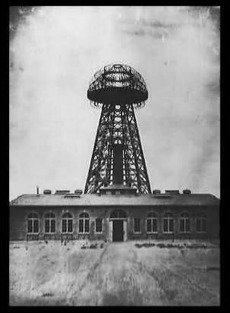
The Ultimate OFF‑GRID Generator situates itself as a do‑it‑yourself intervention designed to contest entrenched household dependence on centralized utilities. Promoted as a democratized cost‑saving architecture, it claims the capacity to reduce domestic electricity expenditures by as much as 80%. Importantly, the system is framed not as a proprietary device but as an instructional framework, guiding non‑specialists through the construction of a compact generator purportedly capable of harnessing renewable or ambient energy flows. The narrative is further embedded in broader cultural imaginaries of suppressed innovation, invoking the figure of Nikola Tesla as symbolic of visionary scientific breakthroughs stifled by monopolistic industrial powers. At its rhetorical center, the system emphasizes a triad of economic relief, ecological stewardship, and personal sovereignty.
Core Assertions of the System
Economic Liberation – The generator promises a reduction of up to four‑fifths in household electricity costs, thereby buffering households from inflationary utility pricing and exogenous market shocks.
Democratized Access – Construction is presented as feasible for laypersons without specialized expertise, opening avenues for marginalized or resource‑constrained populations to achieve a measure of energy autonomy.
Ecological Compatibility – Unlike conventional backup generators reliant on carbon‑intensive fuels, the system is positioned as renewable, non‑polluting, and aligned with ecological imperatives.
Resilience and Autonomy – Decentralized functionality is framed as a safeguard against infrastructural fragility, climatic disruptions, and geopolitical volatility, thereby conferring both existential security and economic stability.
Critical Appraisal: Between Thermodynamic Constraints and Market Narratives
Despite its rhetorical resonance, the Ultimate OFF‑GRID Generator is fraught with scientific contention. Claims of harnessing “ambient” or “cosmic” energy directly confront the laws of thermodynamics, as no peer‑reviewed evidence substantiates the feasibility of such devices producing scalable or economically sustainable power. The absence of transparent performance data, efficiency metrics, or independent certifications further undermines technical credibility and raises concerns regarding long‑term reliability and safety.
By contrast, established renewable infrastructures—such as photovoltaic solar arrays, micro‑wind systems, geothermal installations, and advanced energy storage technologies including lithium‑ion and emerging solid‑state batteries—are empirically validated, rigorously scrutinized, and continually refined. These systems embody decades of cumulative research and are demonstrably effective pathways toward decentralized, sustainable energy production. In comparison, the Ultimate OFF‑GRID Generator functions more as a symbolic vision of autonomy than a verified technological solution.
Socioeconomic and Cultural Resonances
The cultural salience of the Ultimate OFF‑GRID Generator derives less from its technical veracity than from its engagement with widespread discontent surrounding monopolized utilities and systemic inequities. In many sociopolitical contexts, energy provision is perceived as a domain of corporate extraction rather than a universally accessible public good. Within such landscapes, the generator is framed as a vehicle for reclaiming individual agency and sovereignty. Its ecological framing speaks directly to collective anxieties concerning planetary degradation, while its populist emphasis on self‑sufficiency resonates with discourses of resilience, autonomy, and anti‑corporate resistance.
This resonance is especially acute in rural or infrastructurally marginalized regions, where unreliable grid access exacerbates vulnerabilities. Similarly, in contexts of eroded public trust in governance, the generator operates not only as a technological promise but also as an ideological artifact of resistance. By collapsing the distinction between consumer and producer, it symbolically reconstitutes household actors as co‑architects of energy futures.

Conclusion: Aspirational Vision versus Empirical Verification
The Ultimate OFF‑GRID Generator encapsulates the tension between aspirational narratives of household self‑sufficiency and the epistemic hazards of unverified technologies. On one hand, it articulates a radical vision that contests the entrenched hierarchies of energy production and distribution. On the other, it exemplifies the risks inherent in rhetoric unmoored from empirical validation. Absent rigorous data on efficiency, safety, and scalability, its claims remain speculative and largely symbolic.
Nevertheless, its rhetorical potency cannot be dismissed. By mobilizing imaginaries of independence, ecological harmony, and liberation from systemic vulnerability, the system contributes meaningfully to broader debates surrounding the democratization of energy infrastructures. For households pursuing tangible resilience, empirically validated renewable systems constitute more reliable avenues. Yet the symbolic power of the Ultimate OFF‑GRID Generator underscores a larger imperative: the necessity of reimagining energy futures in ways that both honor ecological constraints and empower communities through decentralized autonomy.

 RichardBat says:

 By
By